Source.Assess.Publish.
This page documents the process by which Staleron editorial content moves from a research question to a published article. It exists because the team believes the methodology behind a publication is as important as the content it produces.
Readers deserve to understand not only what is being said, but why the team believes the underlying evidence is robust enough to say it. The document below is a working record — revised as the process evolves.
Research Question Formation
Every article begins with a specific, answerable question — not a topic. "What does the published evidence say about the relationship between hydration and cognitive performance in physically active men?" is a research question. "Hydration" is not.
Questions are drawn from three sources: reader correspondence, gaps identified during editing of other articles, and reviews of recent publications in relevant journals. The question is documented before any writing begins.
Literature Search and Source Collection
The writer assigned to an article conducts a structured search of publicly accessible research databases — PubMed, the Cochrane Library, Google Scholar, and relevant open-access journals. The search is documented: databases consulted, search terms used, and the number of results at each stage.
Sources are collected in a working bibliography that accompanies the draft through every subsequent review stage. The bibliography is not cleaned up after the article is published — it is preserved in the article's internal file as a record.
Source Quality Assessment
Not all published research carries equal weight. The team applies a structured quality hierarchy: peer-reviewed studies in established journals rank highest, followed by systematic reviews and meta-analyses, followed by longitudinal population studies, and then single observational studies. Industry-funded research is noted and not used as primary evidence.
Sample sizes, methodology sections, and conflict-of-interest disclosures are examined. Studies with unusually small samples or significant methodological limitations are noted as such in the source assessment document even when they are included for context.
Draft Writing and Claim Calibration
The first draft is written with explicit claim calibration: each substantive assertion is written in proportion to its evidentiary support. Where the evidence is strong and consistent across multiple studies, the copy says so. Where a single study suggests a finding that has not been replicated, the copy identifies it as a preliminary or emerging observation.
This calibration frequently means writing shorter, more qualified sentences than wellness content typically uses. The editorial team considers this a feature rather than a limitation.
Internal Editorial Review
Every draft passes through at least one other team member before publication. The reviewer checks three things: factual accuracy against the source bibliography, tonal consistency with Staleron's editorial register, and the absence of unsupported claims. The reviewer also reads for inadvertent language that implies stronger certainty than the evidence supports.
Review notes are retained alongside the source bibliography. Articles that require significant revision go through a second pass. There is no fixed turnaround deadline — articles are published when they are ready.
Publication and Source Disclosure
Articles are published with a sourcing section at the end listing the primary references consulted. Sources are identified by author, publication, year, and DOI or public URL where available. The intent is for readers to be able to locate and read the underlying research independently.
The publication date is recorded and visible. A revision date is added whenever substantive content changes are made post-publication.
Bi-Annual Review and Archive Update
Published articles are reviewed every six months by the assigned writer. The review consists of checking whether subsequent publications have significantly changed the evidence base for the article's primary claims. Where they have, the article is updated, the revision is dated, and the new sources are added to the bibliography.
Articles in which the underlying evidence has been substantially contradicted by subsequent research are either substantially revised or withdrawn from the active archive and moved to a historical records section.
How the team handles nutritional ingredient references.
When Staleron content references a specific nutritional ingredient, the following principles apply:
Referenced only in the context of its documented role in supporting normal cognitive function and immune health, as established in peer-reviewed nutritional literature.
Referenced for its contribution to normal energy metabolism and reduction of tiredness, consistent with published research on dietary mineral requirements.
Discussed in the context of its support for normal function of the immune system and its relevance to populations with limited sun exposure.
Referenced for its contribution to normal energy production, particularly in the context of dietary patterns that may affect its availability.

Active ingredients referenced in Staleron content are drawn from documented nutritional sources, with each batch of associated product content accompanied by a certificate of composition. Sourcing prioritises suppliers whose facilities maintain food-grade processing standards.
How Staleron manages external content relationships.
The editorial team maintains formal documentation of all external relationships that could constitute a conflict of interest relative to content. This document is reviewed quarterly.
Display advertising is accepted subject to editorial review. Advertisers do not influence article content, sourcing decisions, or editorial positions.
Where affiliate links are used, they are identified. Affiliate relationships do not determine which products are referenced or how they are described.
Sponsored content, when published, is clearly labelled. It follows the same sourcing and review process as editorial content but with explicit disclosure of the sponsoring relationship.
Independent verification. No self-assessed claims.
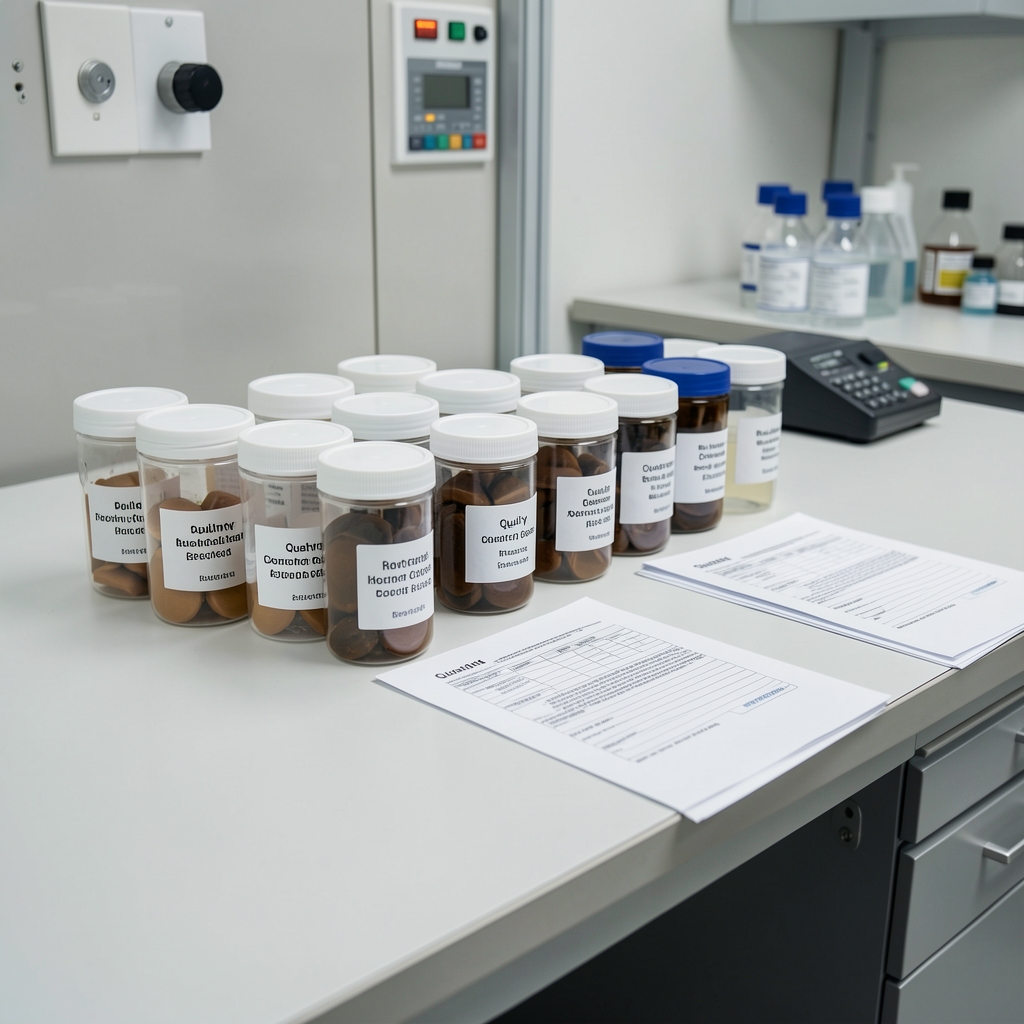
Staleron does not make self-assessed quality claims. Ingredient profiles referenced in the publication's nutrition content undergo independent batch verification for quality and labelling accuracy. The team does not describe this process as certifying the products in question — it describes it accurately: as a verification step that provides documented evidence of composition consistency.
Verification documentation is archived and available on request from the editorial team. Documents are referenced by batch number and date of analysis.
The team does not claim that independent verification constitutes a regulatory endorsement of any kind. It constitutes documented independent assessment of the relevant composition parameters.
- — Ingredient identification and concentration
- — Labelling accuracy against declared composition
- — Absence of undeclared substances
- — Batch traceability documentation
- — Food-grade processing standards confirmation
Staleron is an independent wellness resource focused on everyday nutrition and active lifestyle practices for men. The content is not affiliated with any governmental or institutional body.
Ingredient profiles in Staleron supplements are selected based on published nutritional research and undergo independent batch verification for quality and labelling accuracy.
We recommend speaking with a qualified wellness or nutrition professional before introducing any supplement to your daily routine, particularly if you have specific dietary requirements.